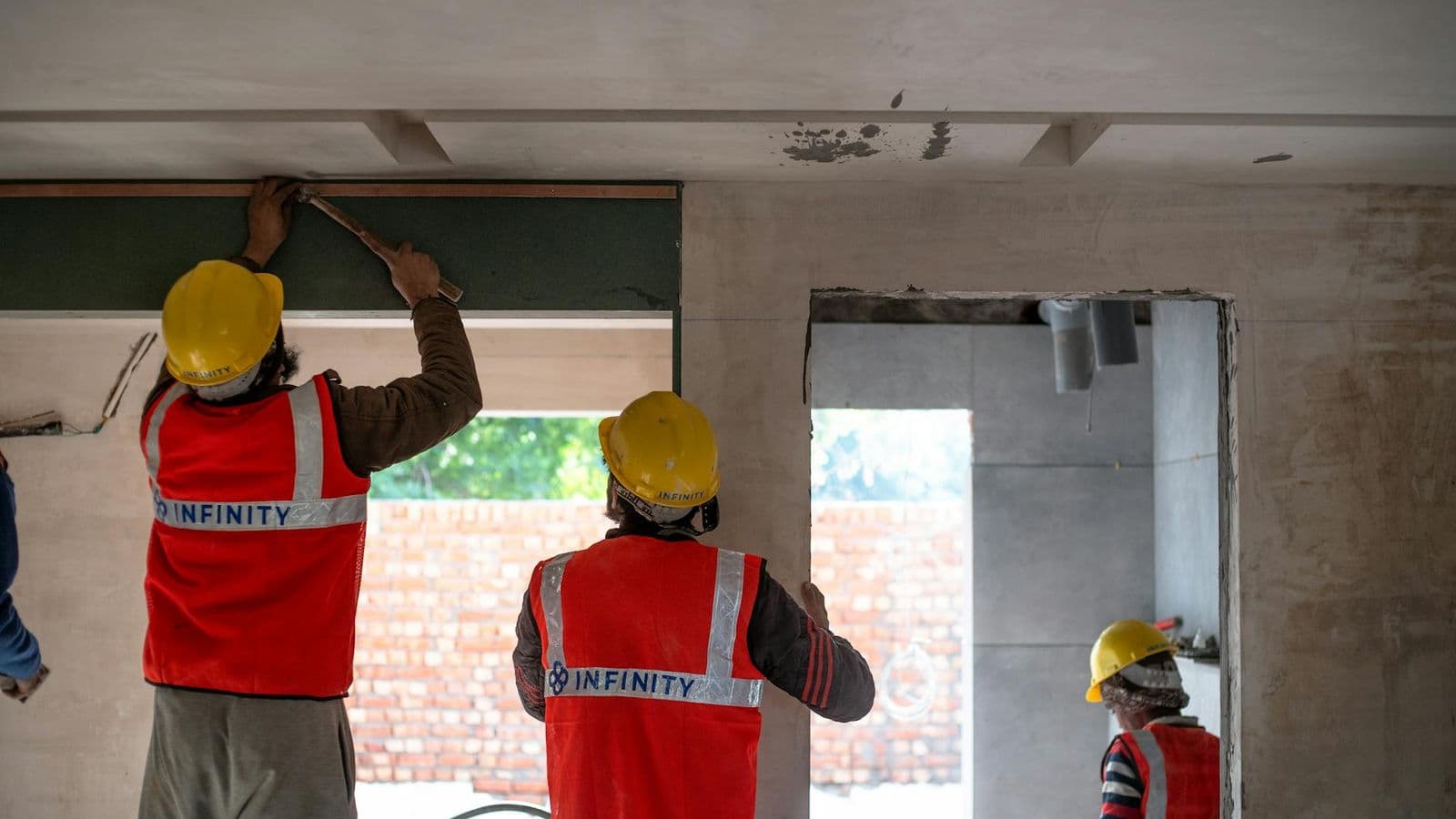
If you are a skilled tradesperson dreaming of building a career — and a new life — abroad, there has rarely been a better moment than right now. Across the UK, the United States, Canada, Australia, and the Gulf, the construction industry is short hundreds of thousands of workers. Governments have committed to enormous housing and infrastructure targets, and the people who can actually swing a hammer, wire a panel, or run a site are in fierce demand. The missing piece for most overseas workers is simple: a company willing to provide visa sponsorship.
That is where construction recruitment agencies come in. The right agency can connect you with a licensed employer, walk you through the work permit process, and turn "I'd love to work abroad someday" into a signed contract and a relocation date. This guide breaks down the top recruitment agencies and employers that sponsor overseas construction workers, how the skilled worker visa routes actually work in each country, what pays the most, and — crucially — how to avoid the scams that prey on hopeful applicants.
Why Construction Is One of the Easiest Routes to Work Abroad
Construction is uniquely positioned among visa-sponsorship pathways because the labour shortage is structural rather than temporary. In the UK alone, industry bodies estimate a shortfall of around 266,000 skilled construction workers against a project pipeline worth roughly £530 billion and a government pledge to build 1.5 million new homes by 2030. Australia, Canada, and the United States tell similar stories: aging workforces, retiring tradespeople, and ambitious building programs that the domestic labour pool simply cannot fill.
For you, that demand is leverage. When a country cannot find enough bricklayers, electricians, carpenters, welders, plumbers, steel fixers, heavy-equipment operators, and site managers locally, employers are legally permitted — and financially motivated — to look overseas. Many of these roles also offer a clear pathway to permanent residency, which is why a sponsored construction job is often described as one of the most practical immigration routes for skilled and semi-skilled workers alike.
How Visa Sponsorship Actually Works (And What an Agency Does)
Before naming names, it helps to understand a common point of confusion: recruitment agencies usually do not sponsor your visa themselves. In almost every country, sponsorship is a legal relationship between you and the employer. The employer must hold a licence or approval from the government, issue you a formal job offer, and take on compliance responsibilities.
So what does the agency do? A good construction recruitment agency:
- Maintains relationships with employers who already hold a sponsor licence or LMIA approval.
- Matches your trade, experience, and certifications to live vacancies.
- Coaches you on CV formatting, interviews, and trade testing.
- Coordinates the paperwork between you, the employer, and the immigration system.
Think of the agency as the bridge. The employer is the sponsor; the agency gets you onto the bridge and across it. Reputable agencies are paid by the employer, not by you — a detail worth tattooing on the inside of your eyelids before we get to the scam section.
United Kingdom: The Skilled Worker Visa Route
The UK runs one of the most generous overseas construction recruitment systems in the developed world, and 2026 has been described by many migration specialists as one of the strongest years in a decade to apply. To hire you, a UK company must appear on the Home Office Register of Licensed Sponsors and issue a Certificate of Sponsorship (CoS). You then apply for the Skilled Worker visa, which requires meeting a points threshold (70 points) and a general salary floor in the region of £38,700 per year, with role-specific "going rates" applying on top.
Major employers that sponsor directly include the country's biggest contractors:
- Balfour Beatty — the UK's largest infrastructure contractor, active on rail, highways, and power, with structured international recruitment programs and hundreds of sponsored workers placed.
- Laing O'Rourke — known for modular and off-site construction, with strong sponsorship pathways for engineers and skilled trades.
- Kier Group — operating across housing, highways, water, and utilities, and one of the more accessible sponsors for bricklayers, electricians, and site operatives.
- Skanska UK — a sustainability-focused major contractor with regular engineering and management openings.
Recruitment agencies worth approaching include Hays (one of the largest construction and engineering recruiters globally), Michael Page (strong in construction, engineering, and project management), and Adecco UK (broad coverage including construction and property). When you contact any agency, state up front that you require visa sponsorship — agencies that don't work with sponsoring employers will tell you immediately, saving everyone time.
A word of caution: UK immigration rules are a moving target. In March 2026, for example, the government introduced a "visa brake" affecting applications from certain nationalities. Always check the rules in force on the day you apply, and consider a brief consultation with a registered immigration lawyer if your case is complex.
United States: H-2B, EB-3, and the Green Card Route
The American system splits into temporary and permanent tracks, and the distinction matters enormously for your long-term plans.
- H-2B visa — the workhorse for seasonal and temporary construction roles. It's capped at 66,000 visas per year, and because construction is one of the heaviest users, the cap fills fast. Employers must begin recruitment and filing months before the start date.
- EB-3 visa — the permanent route, leading to a green card. Under the EB-3 "Other Workers" and skilled categories, an employer can sponsor you for a permanent position, typically over 12 to 24 months, and your spouse and children under 21 can immigrate with you.
- H-1B visa — relevant for degreed professionals such as civil and structural engineers, project managers, and construction-technology specialists.
Large firms including Bechtel, Fluor Corporation, Turner Construction, and AECOM periodically sponsor engineers and project managers, while a wide network of smaller contractors uses H-2B for trade and labour roles. Because the US process is paperwork-intensive and deadline-driven, many successful applicants work through specialist staffing firms and immigration law firms that handle the labour certification and petition filing on the employer's behalf. A strategic tip: starting in a trade role on H-2B and progressing toward a superintendent or project-management position can open H-1B eligibility down the line, especially if you earn a construction-management qualification or PMP certification along the way.
Canada: LMIA, Provincial Nominees, and a Clear PR Pathway
Canada issues more than 400,000 work permits annually and treats skilled trades as a priority. Most construction sponsorship runs through the Temporary Foreign Worker Program (TFWP), which requires the employer to obtain a Labour Market Impact Assessment (LMIA) proving they couldn't fill the role locally. Other routes include the International Mobility Program (IMP) (LMIA-exempt categories), the Global Talent Stream for in-demand specialists, and the Provincial Nominee Program (PNP), which lets provinces nominate workers for permanent residence.
Provinces with active construction pathways include Alberta (Alberta Advantage Immigration Program), British Columbia (BC PNP), and Ontario, where general labour, carpentry, welding, and project-management roles are consistently in demand. Major Canadian builders that have historically sponsored foreign workers include PCL Construction, EllisDon, and Aecon Group, recruiting for carpenters, welders, equipment operators, and construction managers.
On the agency side, several firms specialize in placing trades into Canadian construction and trucking. Look for agencies that are transparent about which program each employer uses and that link directly to official IRCC (Immigration, Refugees and Citizenship Canada) guidance — a strong signal of legitimacy. Canada's biggest draw is the permanent residency pathway: a sponsored job plus a year of Canadian experience can put PR genuinely within reach.
Australia and New Zealand: Fast Track to the Pacific
Australia's construction sector is straining under housing, commercial, mining, and infrastructure demand, and Sydney in particular has become a magnet for sponsored trades. The key visas are:
- Subclass 482 (Skills in Demand / Temporary Skill Shortage) — the main employer-sponsored work visa.
- Subclass 186 (Employer Nomination Scheme) — a direct route to permanent residency.
- Subclass 494 — a regional employer-sponsored visa with PR potential.
Australian employers frequently sponsor carpenters, electricians, and heavy-equipment operators, and many roles include family sponsorship and competitive pay. New Zealand offers a parallel option through the Accredited Employer Work Visa (AEWV), with agencies actively advertising relocation packages for diggers operators, joiners, and drainage labourers across Auckland, Wellington, Christchurch, and Canterbury. Both countries reward applicants who hold recognised qualifications and can pass trade-skills assessments, so investing in certification before you apply pays dividends.
The Gulf: High Pay, Fast Hiring, Short-Term Focus
The Middle East — particularly the United Arab Emirates, Qatar, and Saudi Arabia — remains the world's largest employer of overseas construction labour. Mega-projects, smart cities, and tourism developments keep demand sky-high. Recruitment here is fast-paced, with agencies in source countries (often in South and Southeast Asia and Africa) placing workers on tax-free, fixed-term contracts that frequently include accommodation, transport, and flights.
The trade-off is that the Gulf generally does not offer a route to citizenship or permanent settlement; it is a destination for short-term financial gain rather than long-term migration. If your goal is to save aggressively over a few years, the Gulf can be unbeatable. If your goal is to settle permanently with your family, the UK, Canada, Australia, or the US will serve you better.
<h2 id="country-comparison">Country-by-Country Comparison: Visa Sponsorship at a Glance</h2>
If you only read one section, make it this one. The table below distils every destination above into a side-by-side snapshot so you can match your goals — fast cash, family settlement, or a clear route to a green card — to the right country before you spend a single hour applying.
CountryMain Sponsored Visa RoutePay & Cost SignalPathway to Permanent Residency?Best For
United Kingdom
Skilled Worker visa via Certificate of Sponsorship
~£38,700 salary floor plus role-specific going rates
Yes — settlement (ILR) typically after 5 years
Trades wanting a stable, English-speaking route with family rights
United States
H-2B (temporary), EB-3 (permanent/green card), H-1B (degreed roles)
Prevailing market wage; H-2B capped at 66,000/year
Yes — via the EB-3 green card
Workers chasing permanent US residency or strong seasonal earnings
Canada
TFWP (LMIA), International Mobility Program, Global Talent Stream, PNP
Provincial prevailing wages; employer covers many fees
Yes — among the strongest, via PNP and Canadian experience
Trades wanting the most realistic fast PR pathway
Australia
Subclass 482 (Skills in Demand), 186 (ENS), 494 (regional)
Competitive pay meeting the minimum salary threshold
Yes — 186 and 494 lead to PR
Certified tradespeople wanting high pay plus settlement
New Zealand
Accredited Employer Work Visa (AEWV)
Benchmarked to the national median wage
Possible via residence pathways over time
Trades wanting a smaller, relaxed labour market
Gulf (UAE, Qatar, Saudi)
Employer work permit / labour contract
Tax-free pay, often with housing, transport, and flights
No — no settlement or citizenship route
Maximising short-term, tax-free savings
Use it as a filter, not a verdict. A welder targeting permanent residency should shortlist Canada and Australia; a project manager who wants to earn hard and fast for three years might favour the Gulf; and an electrician who values an English-speaking, family-friendly system will gravitate to the UK.
The Highest-Paying In-Demand Construction Roles
Not all trades are equal in the eyes of immigration systems. The roles that combine strong demand with higher salaries — and therefore the best sponsorship odds — include:
- Site managers and construction project managers
- Civil and structural engineers
- Quantity surveyors and estimators
- Electricians and electrical supervisors
- Welders and steel fixers
- Heavy-equipment and crane operators
- HVAC, plumbing, and pipefitting specialists
Specialised, certified trades almost always beat general labour for sponsorship, because employers can more easily justify why a local hire wasn't available. If you can add a recognised certification, a safety ticket (such as CSCS in the UK or a White Card in Australia), or supervisory experience, your value to a sponsoring employer climbs sharply.
How to Spot a Legitimate Agency — and Dodge the Scams
This niche, sadly, attracts predators. Protect yourself with a few non-negotiable rules:
- Real agencies don't charge you for a job. In the UK, US, Canada, Australia, and New Zealand, charging a worker recruitment fees for placement is illegal or heavily restricted. The employer pays. If someone demands a large "visa fee," "processing fee," or "guarantee deposit" to secure a role, walk away.
- Verify against official registers. Cross-check UK employers on the Home Office Register of Licensed Sponsors, Canadian roles against IRCC and Job Bank, and Australian sponsors via the Department of Home Affairs. Legitimate agencies welcome this; scammers discourage it.
- Be wary of guarantees. No honest agency can "guarantee" a visa. Immigration decisions belong to governments, not recruiters.
- Insist on a written contract. A genuine offer comes with a formal job offer, a named employer, and a clear salary that meets the visa threshold.
- Use a registered immigration lawyer for complex cases. Spending a little on qualified legal advice up front can save you from losing thousands to fraud.
<h2 id="how-to-apply">How to Apply and Get Noticed by Recruiters</h2>
Landing a sponsored role is half preparation, half visibility. Plenty of qualified tradespeople never get a reply — not because they aren't good enough, but because recruiters never find them or can't quickly see that they're sponsor-ready. Here's how to fix both halves.
Get your application right:
- Document your trade. Gather proof of experience, references, certifications, and licences, and translate them where needed. Sponsoring employers need to justify hiring you over a local, so evidence is everything.
- Target the right country first. Decide between permanent settlement (UK, Canada, Australia, US) and maximum short-term earnings (the Gulf) before you apply — the table above is your starting point.
- Build a country-specific CV or résumé. A Canadian résumé differs from a UK CV in length, layout, and detail. Match the local format and keep it ATS-friendly: clean headings, no graphics-only text, standard fonts.
- Prepare for assessment. Many sponsored roles require a trade test, English-language test (IELTS or equivalent), or a formal skills assessment. Practise before you're invited, not after.
Make recruiters come to you:
- Optimise your LinkedIn profile with the keywords recruiters actually search. Put your trade, key certifications, and the phrase "open to visa sponsorship" or "seeking sponsored relocation" in your headline and About section. Recruiters filter by these exact terms.
- Register on the portals that matter. Use official boards (GOV.UK Find a Job, Canada's Job Bank, SEEK in Australia), the major agencies' own talent pools (Hays, Michael Page, Adecco), and reputable sponsorship-focused job sites — and set up alerts so you apply within hours, not days.
- Lead with your sponsorship need — politely and early. State in your first message that you require sponsorship and name your trade, years of experience, and availability. Agencies that don't work with sponsoring employers will say so immediately, saving you weeks.
- Follow up and stay responsive. Send one courteous follow-up a week after applying, keep your documents current, and reply to recruiters the same day. Sponsorship paperwork moves in waves; the candidate who responds fastest often wins the slot.
A recruiter's job is to fill a vacancy with the lowest-risk candidate. Every certification you list, every reference you supply, and every prompt reply you send lowers that perceived risk — and pushes you up the shortlist.
Final Word
The global construction boom has created a genuine, durable opening for skilled overseas workers — and the recruitment agencies and employers covered here are the gatekeepers to it. Whether your ambition is a Skilled Worker visa in Britain, an EB-3 green card in the United States, permanent residency in Canada or Australia, or a high-earning contract in the Gulf, the formula is the same: build a verifiable trade, target sponsoring employers, work with legitimate agencies that never charge you for a job, and treat the immigration rules as a moving framework you plan around rather than fight against.
Do that, and the question stops being whether you can build your career abroad — and becomes which skyline you want to help build first.
<h2 id="faq">Frequently Asked Questions</h2>
Do construction recruitment agencies charge workers a fee for visa sponsorship? Legitimate agencies do not charge you to be placed in a job — the employer pays the recruitment and sponsorship costs. In the UK, US, Canada, Australia, and New Zealand, charging job-seekers placement fees is illegal or tightly restricted. If anyone demands a large "visa fee" or "guarantee deposit," treat it as a red flag and walk away.
Which country is easiest for a construction worker to get visa sponsorship in 2026? There's no single answer, but Canada and Australia are often considered the most accessible for skilled trades because of acute labour shortages and clear permanent-residency pathways. The UK is strong for English-speaking workers thanks to its Skilled Worker visa, while the Gulf hires fastest for short-term, tax-free contracts.
Can I bring my family on a sponsored construction visa? Usually yes in the UK, US (EB-3), Canada, and Australia, where spouses and dependent children can typically accompany you and, in many cases, work or study. The Gulf allows family sponsorship for higher earners but does not offer permanent settlement. Always confirm the dependant rules for your specific visa.
Do I need a degree to get sponsored as a construction worker? Not for most trades. Skilled trades such as electricians, welders, carpenters, and heavy-equipment operators are sponsored on the strength of experience and certifications rather than degrees. A degree mainly matters for professional routes like the US H-1B for engineers and project managers.
How long does the visa sponsorship process take? It varies widely. A UK Certificate of Sponsorship and Skilled Worker visa can move in a matter of weeks once an employer is committed, while a US EB-3 green card typically takes 12 to 24 months. Canadian LMIA-based hiring and Australian employer-sponsored visas generally fall somewhere in between.
Can unskilled or entry-level construction workers get visa sponsorship? Yes, though it's harder. Programs such as the US H-2B and Canada's Temporary Foreign Worker Program do sponsor general labourers when employers can't recruit locally. Adding even one recognised certification or safety ticket dramatically improves your odds against other applicants.
Are sponsored construction jobs guaranteed once an agency contacts me? No. No honest agency or employer can guarantee a visa, because the final decision rests with the government, not the recruiter. Be cautious of anyone promising a "100% guaranteed" visa or job in exchange for payment.
This guide is for general information only and reflects programs and rules as of 2026, which change frequently. It is not legal advice. Always verify current requirements with official government sources or a registered immigration adviser before making decisions.